
Blog
Indian Spice Levels: Find Your Perfect Heat

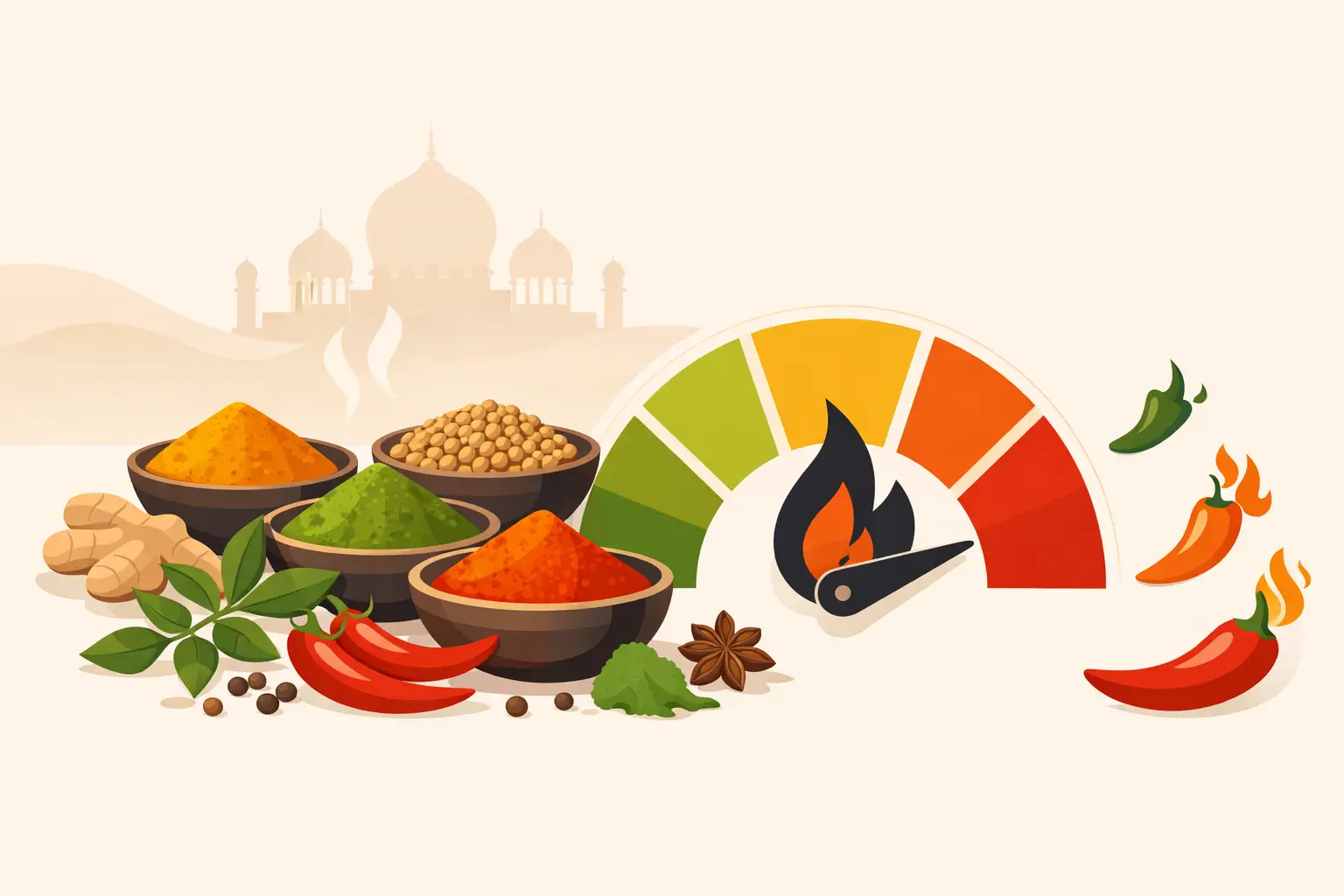
A curry can arrive at the table glowing with cardamom, cumin and fresh coriander, yet feel beautifully gentle on the palate. That is the pleasure of Indian spice levels: they are not simply a measure of heat, but a way of shaping aroma, warmth, depth and character. Whether you are planning a relaxed family meal, a Friday-night takeaway or dinner with friends, choosing the right level means every mouthful can be enjoyed.
For some guests, the perfect dish brings a lively chilli warmth that builds slowly alongside a cold drink. For others, it is a creamy, fragrant curry where the spices are present but the heat stays in the background. Both are true expressions of Indian cooking. The best choice is the one that lets you taste the dish fully and share the occasion comfortably.
Indian spice levels are about more than chilli
One of the most common misconceptions about Indian food is that all of it must be fiery. Indian cuisine is wonderfully varied, with regional traditions, family recipes and cooking methods that create an enormous range of flavours. Chilli is only one ingredient in a much larger spice cupboard.
Turmeric brings earthy colour, cumin lends a nutty warmth, coriander can taste bright and citrusy, and garam masala adds an aromatic finishing note. Ginger, garlic, fenugreek, black pepper, cloves and cinnamon each have their own role. A dish may be richly spiced without being hot at all.
Heat itself can come from different places. Fresh green chillies often give a sharper, brighter kick, while dried red chillies can bring a fuller, deeper warmth. Black pepper has its own tingling heat, and ginger can add a gentle glow. The result depends on how these ingredients are balanced with onions, tomatoes, yoghurt, cream, coconut, herbs and slow-cooked sauces.
That is why two dishes described as medium may not taste identical. One may be tomato-led and tangy, another creamy and mellow, while a third may have smoky notes from the tandoor. Spice level is useful guidance, but the dish’s ingredients and style matter just as much.
A simple way to choose your heat
If you are new to Indian food, begin with flavour rather than trying to prove anything with chilli. A mild dish is not a lesser choice. It often gives delicate spices, roasted meats or vegetables, and a silky sauce more room to shine.
Mild dishes are ideal for anyone who prefers gentle warmth, for younger diners, or when you want a calming contrast to bolder starters and sides. Creamy curries, yoghurt-based preparations and dishes enriched with almond, coconut or butter often sit naturally at this end of the spectrum. They can still be full of fragrance and satisfying richness.
Medium is often the comfortable middle ground for regular curry lovers. It provides a warming tingle without overwhelming the rest of the meal. This can be a lovely choice when sharing a table, particularly alongside tandoori dishes, naan, rice and cooling accompaniments. A medium curry should still allow the sweetness of tomatoes, the savoury depth of onions and the perfume of whole spices to come through.
Hot dishes are for those who enjoy a confident chilli presence. The heat may arrive quickly or build with each bite, depending on the recipe. A good hot curry should not be a wall of fire. It should still have body, balance and a clear sense of the ingredients beneath the chilli.
If you usually enjoy a medium curry but are curious about something hotter, it can be wiser to move up gradually. Order one hotter dish for the table and pair it with milder choices, rice and bread. You will get the thrill of extra heat without making the whole meal difficult to enjoy.
Think about the whole table
A shared Indian meal is designed for variety. One guest may choose a mild, creamy curry while another goes for something punchier, with tandoori starters in the middle and plenty of rice and naan to pass around. This is not just practical. It is part of the joy of the occasion.
For a family meal, consider keeping the main dishes mild to medium and adding spicier elements for the people who want them. For a gathering with friends, choosing a mix of heat levels gives everyone something to return to. It also makes the meal feel more generous and celebratory, with different colours, aromas and textures across the table.
What changes the feel of a spicy dish?
The same amount of chilli can feel very different depending on its setting. A rich sauce made with cream, yoghurt or coconut may soften the sensation of heat. Tangy tomato, lemon or tamarind can make spice seem brighter and more immediate. Char-grilled tandoori cooking brings smoke and caramelisation, which can make a dish taste bolder even when it is not especially hot.
Texture matters too. A slow-cooked curry can carry spices in a rounded, comforting way, while a drier dish may feel more direct because the seasoning sits closer to the surface of the ingredients. Fresh coriander, mint and cooling yoghurt can lift a warmer dish without taking away its personality.
Rice and bread are not merely side dishes. They help create balance. Steamed rice softens a lively sauce, while naan offers a warm, pillowy contrast to chilli and spice. A yoghurt-based side can be especially welcome with a hotter choice. Rather than trying to mask the heat, these accompaniments let you enjoy it at your own pace.
How to order with confidence
The simplest approach is to be honest about what you enjoy. If you like gentle warmth but do not enjoy a lasting burn, say so. If you love chilli but want flavour first, that is useful information too. Restaurant teams want your meal to feel right, whether you are dining in or arranging a takeaway for home.
It also helps to mention who you are ordering for. A meal for two adventurous diners calls for a different balance from a family supper with children or a group order for colleagues. When you are unsure, choose a familiar mild or medium main and add one more adventurous dish to share.
At Maloti Indian Cuisine, the aim is to make every order feel welcoming, from a quick collection after work to a table filled with family and friends. Asking about warmth, ingredients or suitable choices is part of the hospitality. There is no need to know every curry name before you order.
A note on changing the heat
Many dishes can be prepared with less or more chilli, but there are sensible limits. Reducing chilli may make a dish gentler, yet its original recipe may still have a naturally bold character from pepper, ginger or aromatic spices. Adding extra chilli can raise the heat, but too much can disturb the balance that gives a curry its depth.
For the best result, ask for an adjustment that suits your palate rather than simply requesting the hottest possible version. A well-balanced hot curry is far more memorable than one that hides every other flavour.
Let your palate lead the way
There is no correct answer when it comes to Indian spice levels. Some evenings call for a soothing, fragrant curry and warm naan; others call for the cheerful challenge of a dish with real chilli sparkle. Your preference may change with the season, the company and what else is on the table.
Choose the heat that leaves you wanting one more spoonful, one more shared bite, and a little longer around the table.